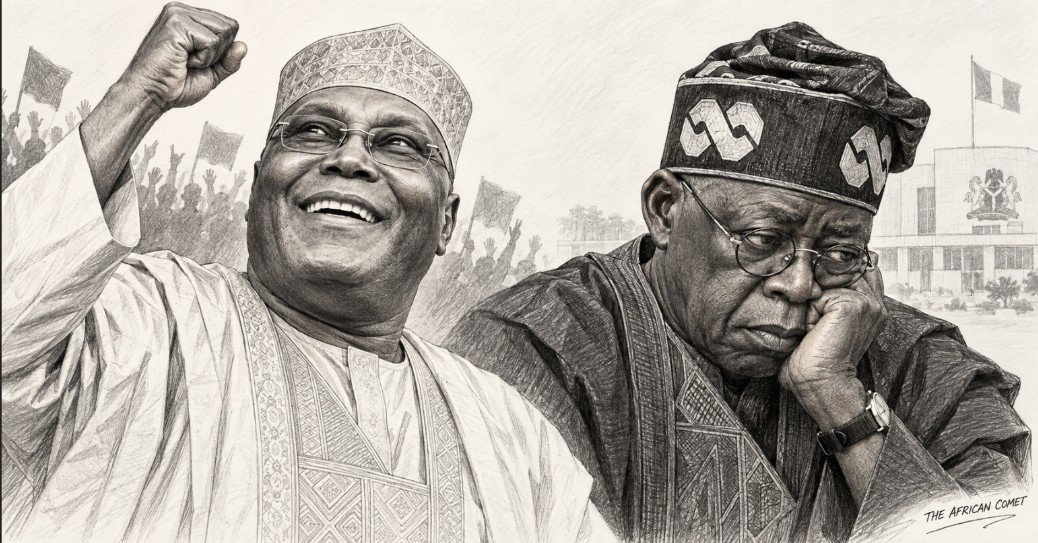
Tinubu has declared an age of prosperity. Atiku has asked the question every Nigerian pot is asking.
By Dr. Pedro Obaseki
Nigeria’s 66th Independence Day gave us two sermons and one congregation.
In the morning, from Aso Rock, President Bola Tinubu told the nation that the “emergency treatment is over.” The age of reform had done its work, he said; the age of prosperity had begun. Nigeria had passed through its own Red Sea, and the Promised Land was in sight.
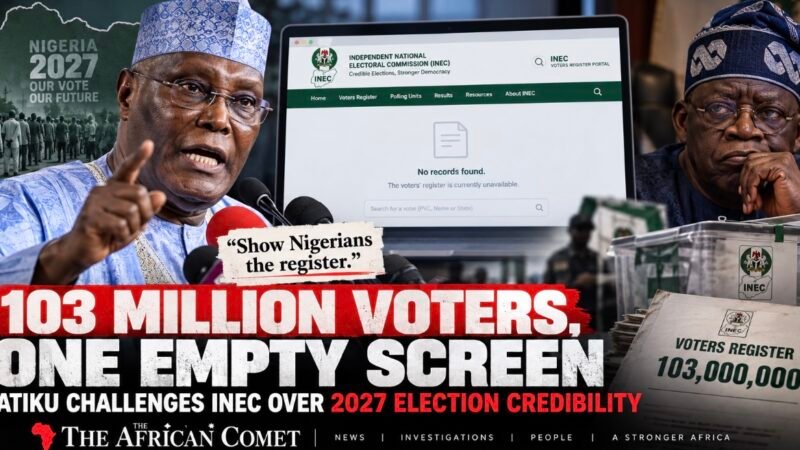
Hours later, from the ADC headquarters in Abuja, Atiku Abubakar replied with five words:
“Bola, where is this prosperity?”
I declare my interest: I stand with Atiku and serve his campaign. But a partisan who wishes to be believed must come with receipts, not slogans. So let us open the books.
THE DOCTOR’S CHART
The President built his broadcast on a hospital bed. Nigeria was a cancer patient; his predecessors gave morphine, he chose surgery. Those who now speak of relief are, in his telling, tempting the patient back to the needle of subsidy.
But no doctor declares a patient healed from a podium. He reads the chart. And the chart of the Nigerian household is the market receipt.
Atiku read it aloud: “No mother struggling to feed her children is asking for ‘morphine’.” She is asking a plainer question: if this is the cure, why does the medicine keep emptying her purse?
By the President’s account, growth is up, reserves are rebuilt, the naira is steadier and non-oil exports hit a record. But GDP is not garri. A worker cannot board foreign reserves to the office. Even the President conceded that millions of Nigerians “cannot wait for tomorrow.” On that, both men agree. The quarrel is about today.
THE SOUP-POT ECONOMY
Falling inflation does not mean prices have come down. It means they are climbing the hill a little less fast. But prices are still climbing. Headline inflation was 15.39 per cent in August; food inflation, 19.57 per cent. The fire under the pot has been lowered, but the soup that boiled away is not coming back.
Atiku gave that loss a face. An egg that cost about ₦88 in April 2023 cost ₦261 by May 2026. A loaf that sold for about ₦500 now sells for about ₦2,000, and the size of the loaf has shrunk on the way.
The President speaks fluently of direction. Nigerians live in condition.
THE PETROL ARITHMETIC
Petrol is the blood in Nigeria’s veins. It flows into every bus fare, every farmer’s lorry, every barber’s generator, every business owner’s factory.
In April 2023, the National Bureau of Statistics put the average pump price at ₦254.06 a litre, so the ₦30,000 minimum wage bought about 118 litres. Today the minimum wage is ₦70,000, but with petrol around ₦1,400 in Lagos and Abuja, and costlier across much of the North, it buys about 50.
On paper, the worker got a raise. At the pump, he took a massive pay cut.
THE PROMISE THAT FELL DUE
On September 19, after Atiku released his Subsidy Solution, President Tinubu hastily pledged that Nigerians would see measurable cuts in transport fares from October 1, under the National Affordable CNG Transit Programme. October 1st came, and his Independence broadcast, a speech devoted to prosperity, said nothing about it.
Atiku asked what any commuter would ask: publish the routes, the old fares, the new fares and the number of Nigerians riding cheaper. A promise is not a bus. You cannot ride it to work.
Promise. Deadline. Result. So far, only the first has arrived.
THE BILL ALWAYS COMES
Nigeria’s public debt stood at ₦166.79 trillion at the end of June, up from ₦87.38 trillion a month after this administration took office. In three years, the national credit card has almost doubled its balance. Borrowing is not a sin; borrowing in the dark is. Before another dollar is borrowed in the people’s name, the projects must be named, the costs shown and the payees disclosed.
On September 30, the President also signed the fourth extension of the 2025 capital budget, now stretched to December 31, 2026. A budget is meant to discipline a government’s calendar as well as its purse. Ours has become a calendar without a last page.
ATIKU’S ANSWER
A critic with no alternative is only a heckler. Atiku has tabled a plan: a capped and budgeted production subsidy, not the old bottomless pit, paid only on petrol verified as refined in Nigeria, modular refineries included and imports shut out. Its costs would be published, its payments independently audited, its benefit delivered at the pump, and its bill met partly by cutting government waste.
This is not morphine. It is a measured transfusion for a patient who has bled long enough, and it is built to be inspected. That is more than can yet be said for a prosperity that so far lives only in a speech.
THE MANNA TEST
The President chose his scripture well. But the Exodus story has a chapter he did not read aloud. In the wilderness, long before any Israelite set foot in the Promised Land, there was manna on the ground every morning. The proof that the journey was real did not come from Moses’ speeches. It came with breakfast.
Nigerians are told the Red Sea is behind them. Yet each morning they wake to the same empty pot.
A Promised Land cannot be certified from the balcony of the Villa. It must be reachable from the market stall in Kano, the workshop in Aba, the farm in Benue and the danfo in Lagos. Governments do not get to declare citizens prosperous. Citizens know, the way a mother knows without a statistician whether the soup will go round.
Oga Bola, you said the Red Sea is crossed. But where is the manna?
Dr. Pedro Obaseki is Senior Adviser on Policy and Strategy to Atiku Abubakar, presidential candidate of the ADC, and a Director on the ADC Presidential Campaign Council.