Minna and Nigeria’s deadly drift from arrest to punishment without trial
By Dr. Pedro Obaseki
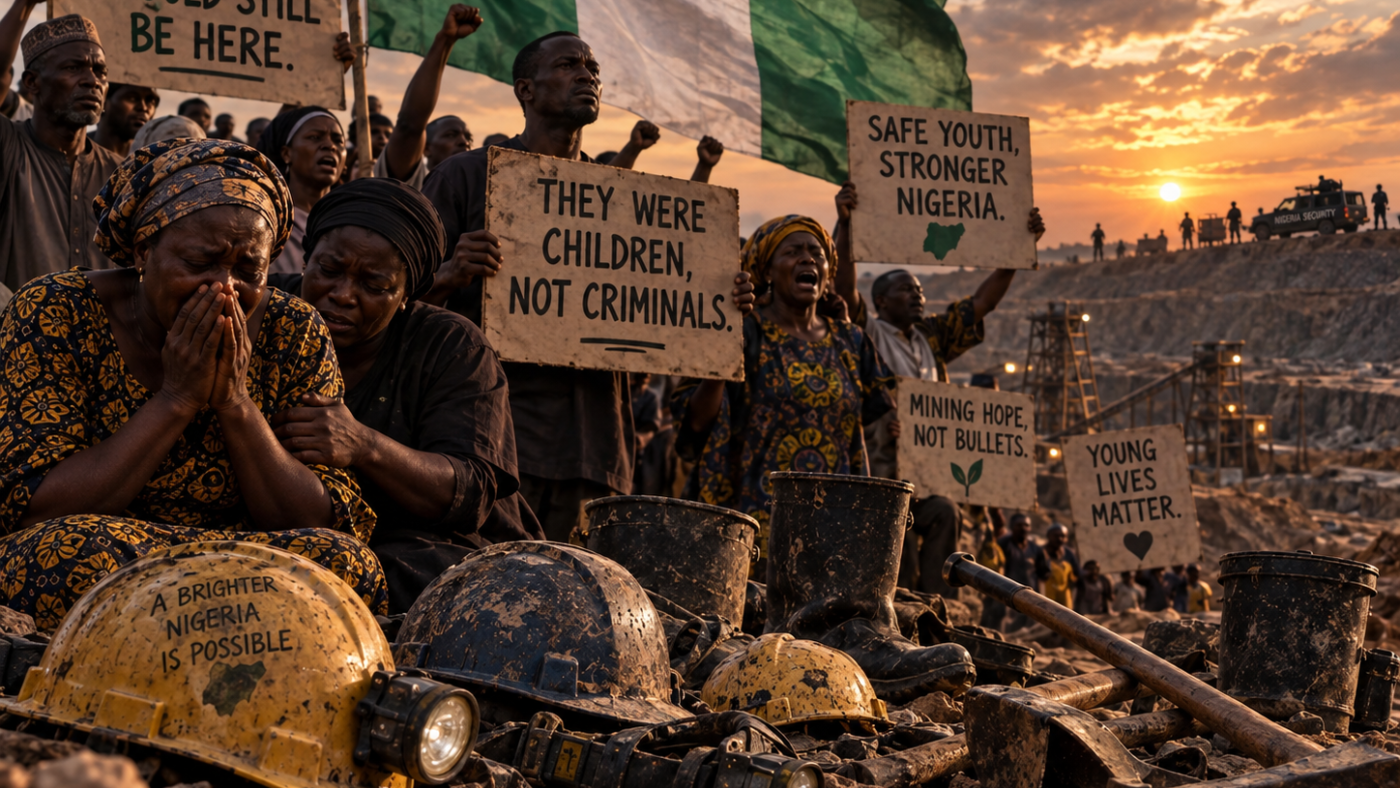
Thirty-seven Nigerians were arrested by the Nigeria Security and Civil Defence Corps in Niger State.
Within two days, 37 were dead.
They had been arrested on suspicion of illegal mining. They had not been tried, convicted or sentenced by any court. Yet they died while being held by an agency of the Nigerian government. The precise cause of death remains under investigation.
The fact that many of the dead were children makes the tragedy even more disturbing.
Niger State Governor Mohammed Umaru Bago said many were between 14 and 18. A teenage miner interviewed by News Central said of those working at the site: “We are under 18.” He explained that poverty had driven them into mining to support their families and help pay school fees.
“Many” is not a number.
Nigeria must publish the names and ages of all 37 victims and establish precisely how many were minors.
But Minna is not only about their ages. It is about what happens when arrest begins to resemble punishment, detention becomes a substitute for conviction and security agencies assume powers constitutionally reserved for the courts.
That is how extrajudicial punishment becomes normalised — not necessarily by written policy, but by repetition, impunity and the quiet institutional acceptance of conduct that should scandalise any constitutional democracy.
When allegations of unlawful killings, torture, arbitrary detention and deaths in confinement recur across agencies, states and years, the question becomes unavoidable: are these merely the excesses of occasional rogue officers, or are we witnessing the semi-institutionalisation of extrajudicial punishment by instruments of the Nigerian State?
This concern is not isolated.
Amnesty International has documented allegations of extrajudicial executions, torture, unlawful detention and deaths at the police anti-kidnapping facility known as Tiger Base in Owerri. It also reported that at least 24 protesters were killed by police during the 2024 #EndBadGovernance demonstrations, with no member of the security forces prosecuted over those deaths one year later.
Different agencies. Different victims. The same question:
Who protects Nigerians when the Nigerian State takes away their liberty?
In a constitutional democracy, the answer must be the State itself.
Once government deprives a citizen of liberty, its duty of care becomes greater, not weaker. The cell door does not suspend the Constitution. An accusation does not extinguish the right to life. Suspicion is not a sentence.
President Bola Tinubu has ordered an investigation and declared that no citizen should die in government detention through negligence, abuse or inhuman treatment. The Niger State NSCDC commandant and 20 other officers have been suspended while a ten-member committee investigates the arrests and deaths.
Those are necessary steps.
But Nigeria has had committees before.
This investigation must produce more than promises and paperwork. Authorities must publish the names and ages of the victims; establish the cause of every death; determine how many detainees were packed into the cells and whether the facilities were adequate; preserve medical, detention and operational records; interview survivors; and investigate the allegation that NSCDC personnel fired at miners.
And if the evidence establishes criminal responsibility, those responsible must face prosecution.
Suspension is not justice.
Transfer is not justice.
Retirement is not justice.
Nor can the State claim to enforce the law while violating it.
The involvement of children raises the failure to another level. Poverty apparently drove some of them into dangerous mines to supplement family incomes and pay school fees. These were precisely the vulnerable citizens whom the instruments of State should have protected.
Instead, some ended up dead after arrest.
Illegal mining is an offence. Government has both the right and the responsibility to regulate Nigeria’s mineral resources, dismantle illegal operations and prosecute those responsible.
But law enforcement must know the difference between the baron and the boy.
Who owns these mines? Who finances them? Who purchases and moves the gold? Who profits from the labour of children driven underground by poverty?
Those questions matter because the poorest person at the bottom of an illegal enterprise should not become the easiest substitute for pursuing those who organise and profit from it.
Whatever offence these 37 Nigerians were suspected of committing, no cell was a courtroom, no security officer was a judge and detention was never a sentence of death.
Nigeria must restore that boundary before impunity itself begins to resemble policy.
When arrest becomes punishment and confinement becomes execution, the rule of law is no longer protecting citizens. It is dying with them.
Dr. Pedro Obaseki is a political strategist, scholar and media practitioner. He writes in his personal capacity.