Offers policy framework to President; warns against repeating petrol subsidy experience with electricity
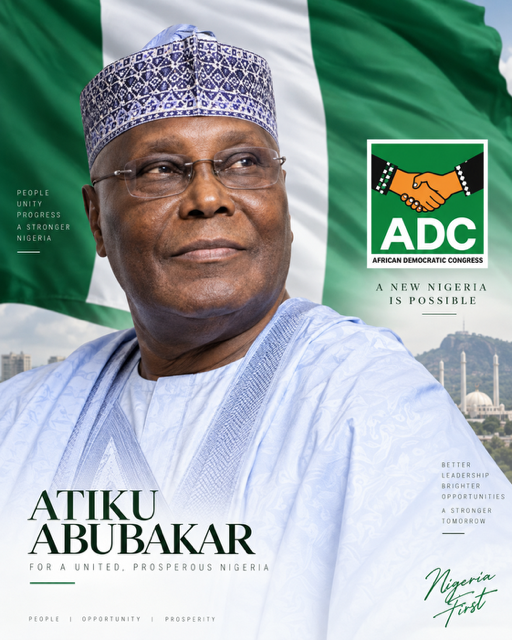
ABUJA — Former Vice President and African Democratic Congress presidential candidate, Atiku Abubakar, has urged President Bola Tinubu to take immediate steps to reduce petrol prices and ease the cost-of-living pressure on Nigerians, declaring that temporary palliatives cannot substitute for economic policies that address the causes of hardship.
In a national address on fuel prices, palliatives and the cost of living on Friday, Atiku said the consequences of the removal of petrol subsidy in May 2023 had spread far beyond filling stations, driving up transportation, food, production and household costs.
“When petrol becomes expensive, transportation becomes expensive. When transportation becomes expensive, food becomes expensive,” Atiku said.
He argued that farmers, traders, workers and businesses were all paying higher costs, which were ultimately transferred to consumers.
“In the end, the Nigerian family receives the bill,” he said. “When government makes energy expensive, it makes life expensive.”
Atiku directly challenged Tinubu to reconsider his economic approach, recalling that the President had previously dismissed his advocacy for government intervention to moderate petrol prices as demonstrating “serious ignorance” of governance and economics.
He questioned whether similar concerns now being expressed by organised labour, petroleum marketers, manufacturers and ordinary Nigerians should also be dismissed.
“If everybody who questions your policy is ignorant, while only the President is presumed to be wise, then we have a leadership problem on our hands,” Atiku said.
He maintained that economic policy should ultimately be measured by its impact on household welfare rather than government revenues or headline economic statistics.
According to him, rising government revenues mean little to citizens if their incomes can purchase less food, fuel, electricity and transportation.
“Economic growth must enter the home. It must enter the market basket. It must show up in the purchasing power of the worker,” he said.
Atiku urged Tinubu to use what he described as the remaining eight months of his administration to provide relief, saying the President should adopt workable proposals irrespective of their political origin.
“Bola Tinubu should not be ashamed to do what is necessary to lower the price of petrol simply because Atiku Abubakar proposed a government intervention,” he said.
“He should just take the idea. Rename it if he wishes. And even take the credit. What matters to me is that Nigerians pay less.”
The former vice president also criticised excessive reliance on palliatives, arguing that food distributions and cash transfers may provide temporary assistance but cannot compensate indefinitely for declining purchasing power.
“Do not make life unbearable and then distribute bags of rice as evidence of compassion,” he said.
Using one of the strongest metaphors in the address, Atiku added: “Do not break a man’s legs, hand him crutches and demand applause for providing mobility.”
He summarised his position by declaring: “Palliatives manage pain. Good policy addresses the source of the pain.”
Atiku also warned the Federal Government against repeating what he described as mistakes associated with the removal of petrol subsidy as it considers further reforms to electricity pricing.
He said households, artisans, small businesses and manufacturers were already struggling with electricity and alternative energy costs.
“The barber needs electricity for his clippers. The tailor needs it for her machines. The frozen-food seller needs it to preserve her stock. The welder needs it for his equipment. The manufacturer needs it to keep the factory alive,” he said.
“The lesson of petrol must not be repeated with electricity. Do not remove first and think later. Do not impose the pain first and search for palliatives afterwards.”
Atiku offered to provide the Tinubu administration with policy ideas and technical input capable of bringing immediate relief, insisting that Nigerians should not have to wait for a change of government before benefiting from proposals that could improve their lives.
“If you need the framework, I will provide it. Implement it under your government. Give it whatever name you choose. Take the credit,” he said.
“I ask for only one thing: Let Nigerians breathe.”
Looking beyond the current administration, Atiku restated his proposal to introduce, if elected in 2027, a transparent production subsidy for petroleum products refined in Nigeria and sold domestically.
Under the proposal, government support would be tied specifically to locally refined products, while imported petroleum products would not qualify.
Atiku said the scheme would have a fixed expenditure ceiling, require National Assembly approval and be subjected to independent audits.
He argued that such intervention should be designed not merely to subsidise consumption but to encourage domestic production while lowering prices for consumers.
The former vice president said political competition should not prevent cooperation where the immediate welfare of Nigerians was concerned.
“I am prepared to compete with you politically. But I will never compete with the welfare of the Nigerian people,” Atiku told Tinubu.
“The presidency may be contested. The wellbeing of Nigerians should never be.”
He concluded that the true measure of economic performance was not statistics announced by government, but the purchasing power of ordinary citizens.
“Nigerians do not live on statistics,” Atiku said. “They live on what their hard-earned money can buy.”