By Comrade Ikhuenbor Felix Igbinevbo (Mr. Figo)
27 September 2026
A few days ago, I argued that what Nigeria needs today is a National Emergency Rescue — a deliberate and decisive response to the hardship confronting millions of citizens. Today, I take that argument a step further.
The starting point is the reality before us.
The cost of living has placed immense pressure on households. Businesses are struggling with rising operational costs. Farmers face higher production and transportation expenses. Workers are finding that their incomes no longer stretch far enough, while young Nigerians confront an increasingly constrained economic environment. These are not distant statistics. They are the daily realities of families across the country. It is against this background that I have examined Atiku Abubakar’s policy direction.
One of the most immediate pressures is energy. Atiku has proposed a targeted production subsidy for petroleum products refined in Nigeria, with imported products excluded from the arrangement. The objective is clear: reduce the cost of domestic refining, bring down energy and transportation costs, and restore some purchasing power to citizens.
The significance goes far beyond the pump price. Fuel costs run through the entire economy, affecting transportation, food distribution, agricultural logistics, commerce and household expenditure. When the cost of moving people and goods rises, the burden reaches every corner of society — the trader taking goods to market, the farmer moving produce from farm to town, the worker commuting to work and the family struggling to balance an increasingly stretched household budget.
Education is another critical front. Atiku has proposed a review of NELFUND and debt forgiveness for qualifying student borrowers, alongside a broader commitment to making education more affordable and restoring scholarships and grants. The issue is straightforward: the rising cost of education is placing an additional burden on Nigerian families.
A young Nigerian should be able to pursue higher education without mortgaging the future before it has begun. Education should expand opportunity, not create a financial burden that follows graduates into their early working years. Economic policy becomes real at this point. It can determine whether a student remains in school or drops out, whether a household keeps its finances afloat or makes painful trade-offs, and whether a small business survives a difficult period or closes its doors.
Nigeria therefore needs an economic response that recognises the connection between these pressures rather than treating them as isolated problems. Reduce the cost of energy and transportation, and households gain breathing space. Make education more accessible, and more young Nigerians gain a genuine pathway to opportunity. Support domestic production, and the economy creates greater room for enterprise, employment and investment. Confront hunger, insecurity and the cost-of-living crisis with the urgency they demand, and government begins responding to the realities citizens face every day.
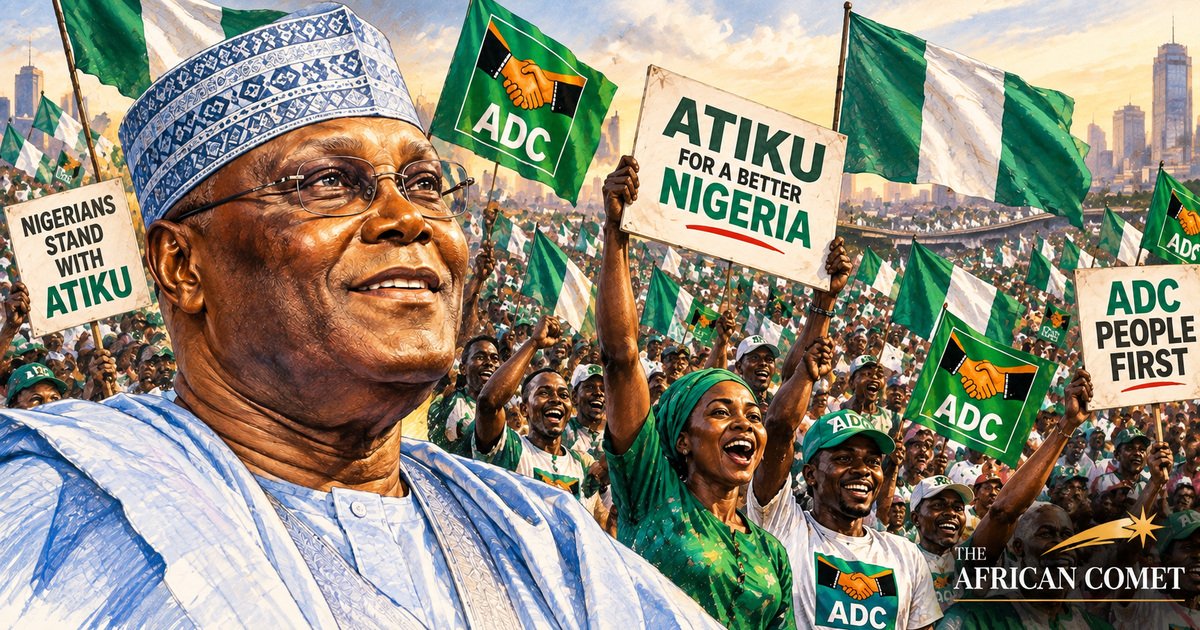
This is why I describe Atiku’s policy direction as a National Emergency Rescue. Nigerians do not live on economic data. They live on what their incomes can afford, what their businesses can sustain and what their families can provide. That should be the true measure of economic policy.
Nigeria needs a government capable of easing pressure on households, restoring purchasing power, expanding opportunity and rebuilding confidence in the future. Behind every economic indicator is a family, a business, a farmer, a worker or a young Nigerian trying to build a life.
Yet presidential policy alone cannot deliver this transformation. Turning a national vision into action requires effective legislative support. The President cannot implement a programme of this scale without the Senate and the House of Representatives providing the legal framework and institutional backing required to translate policy commitments into concrete programmes.
This is why my support for Atiku in Edo South in 2027 is all-inclusive.
For the Senate, Edo South Senatorial District, I stand with Hon. Matthew Iduoriyekemwen.
For the House of Representatives, I stand with Dcn. Festus Osagie Osaigbovo for Orhionmwon/Uhunmwode, Dr. Osamwonyi Irowa for Oredo, Hon. Ekundayo Ukponmwan for Egor/Ikpoba-Okha, and Hon. Ethan Osazemen Uzamere for Ovia.
Having engaged with each of them, I can attest to their capacity, credibility and preparedness. They are qualified, tested and ready to lead, legislate and serve. They represent the competence and character Edo South requires for effective representation — and the legislative partnership Atiku will need to pursue a rescue agenda that makes life more bearable and the future more possible.
My support therefore extends across the ballot — from the Presidency to the Senate and the House of Representatives — because effective national governance requires more than a President. It requires a National Assembly prepared to provide the legislative partnership necessary to move the country forward.
For me, this is no longer a conversation about political promises. It is about the kind of response Nigeria needs at a moment when millions of citizens are asking for one thing above all else: a government that makes life easier today and more hopeful tomorrow.
#MrFigoSpeaks
Comrade Ikhuenbor Felix Igbinevbo (Mr. Figo)
Leader, Team Figo-Connect