By Dr. Sani Sa’idu Baba
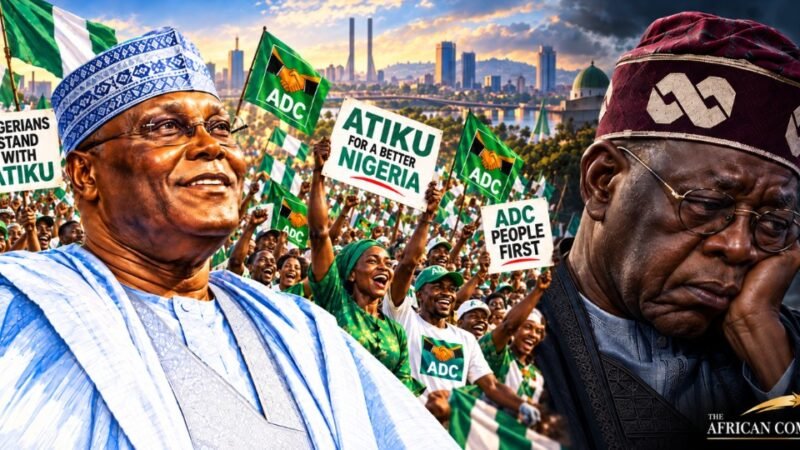
There is a political wind blowing across Nigeria, and increasingly, its direction appears to be towards the African Democratic Congress and its presidential candidate, Atiku Abubakar. It would be premature for anyone to declare the outcome of the 2027 presidential election today, but it would be equally dangerous for any political leader to ignore the body language of the electorate, the growing opposition realignment and the mood of a nation increasingly eager to express itself through the ballot box. The question confronting the political establishment is no longer simply whether Nigerians are dissatisfied; it is whether that dissatisfaction is gradually consolidating around a particular political alternative.
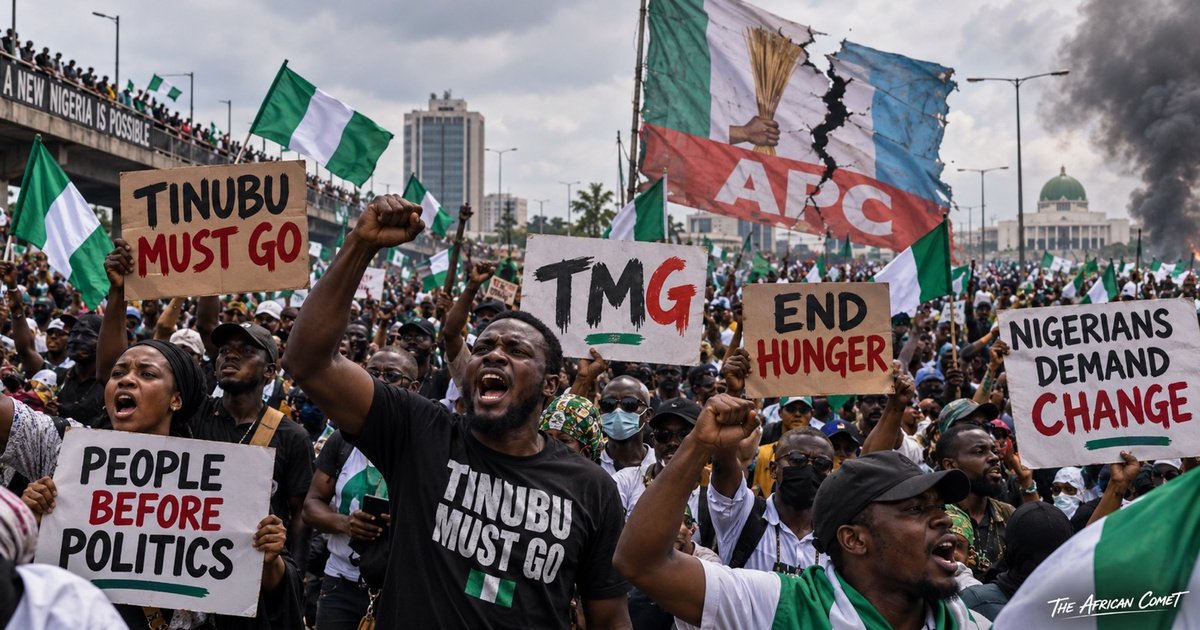
The latest opinion poll conducted by the Tinubu Must Go (TMG) movement has provided perhaps the clearest recent indication of that direction. The 24-hour online exercise, conducted on September 24 and 25, recorded 109,799 responses. Of these, 80,809 respondents, representing 73.6 per cent, backed the Atiku Abubakar–Rotimi Amaechi ticket of the ADC, while the Peter Obi–Rabiu Kwankwaso ticket recorded 24,519 votes, or 22.3 per cent, with 4,471 votes, representing 4.1 per cent, going to other candidates. As a researcher, I know the exercise is not a substitute for a nationally representative scientific survey, however, the sheer size of the participation and the margin recorded by the ADC make it a political signal that cannot simply be waved away.
More importantly, the poll did not occur in a political vacuum. It came against the background of widespread public frustration over economic hardship, insecurity and the rising cost of living, as well as continuing opposition realignments ahead of 2027. The significance of the TMG result, therefore, lies not in pretending that 73.6 per cent represents all Nigerians, but in recognising that among those who participated in this particular exercise, the direction was overwhelmingly towards Atiku and the ADC. When that signal is placed alongside the wider political mood, it becomes increasingly difficult to dismiss the possibility that a substantial section of the electorate is looking beyond the ruling party for an alternative.
The recent Osun governorship election provides another reminder that political calculations can change dramatically at the ballot box. Ademola Adeleke, contesting under the Accord Party, defeated the APC candidate, Bola Oyebamiji, despite the huge resources and the federal backing. Osun does not predict the outcome of the presidential election, but its lesson is important: political structures that appear formidable can be challenged when voters become sufficiently mobilised and determined. The current mood of the nation reflects such a determination.
This brings me to the question that Nigerians, particularly those who genuinely care about the survival of our democracy, should begin asking now: Who will prepare President Bola Ahmed Tinubu for the possibility of defeat?
Although this is not a declaration that Tinubu has already been defeated. It is a question of democratic preparedness. If the body language of the electorate, the emerging political realignments and the prevailing mood of the nation ultimately produce a result that does not favour the incumbent, President Tinubu must be psychologically and politically prepared to accept that verdict with dignity. No president is bigger than the people who elected him, and no political office is worth placing the peace and stability of Nigeria at risk.
The international community, peace-building organisations, respected elders, religious and traditional leaders, civil society organisations and other national stakeholders should therefore be bold enough to begin these conversations now. They should engage the major political actors and prepare them for every legitimate outcome, including an opposition victory. In particular, President Tinubu should be encouraged to see the acceptance of an unfavourable electoral result not as humiliation or personal defeat, but as an act of statesmanship. If Nigerians freely choose another leader through a credible election, accepting that verdict would demonstrate confidence in democracy and place the national interest above personal political ambition. That is the truth, and Nigeria needs to hear it before the election rather than after it.
Nigeria already has a powerful precedent in 2015, when President Goodluck Jonathan accepted the presidential election result and conceded to Muhammadu Buhari, demonstrating that electoral defeat does not have to become a national crisis. A year later, in 2016, Ghana’s then President John Dramani Mahama similarly accepted defeat to Nana Akufo-Addo and facilitated a peaceful transfer of power; Mahama’s subsequent return to the presidency is itself a powerful reminder that conceding an election is not the end of a political journey. In Liberia, President George Weah also accepted defeat in the 2023 presidential election and congratulated his opponent, Joseph Boakai. These are among several examples, in Africa and beyond, of political leaders choosing the peace and stability of their nations over the pursuit of power at all costs. Ultimately, democracy is not sustained merely by winning elections; it is sustained by the courage to accept the people’s verdict when the outcome is unfavourable. It is about peace, stability, national unity and the preservation of democratic values for generations to come.
This is why the responsibility ahead of 2027 is greater than the ambition of any individual candidate or political party. Nigerians must be allowed to vote freely, every legitimate vote must be counted accurately, and every candidate must be prepared to accept the genuine outcome. If the APC wins a credible election, so be it. If the opposition wins a credible election, the governing party should accept it. Democracy cannot operate on the principle that an election is legitimate only when one’s preferred candidate wins.
But if the emerging direction of public sentiment continues to point towards Atiku Abubakar and the ADC, the political establishment must be prepared for what that could mean. The task of the opposition will be to earn and protect that support through credible organisation and peaceful democratic engagement, while the responsibility of the governing party will be to respect the same electorate whose votes gave it power in the first place. The TMG and other opinion polls does not decide the election, but it has put an important question on the table: what happens if the growing opposition sentiment eventually becomes the verdict of the ballot box?
The time has therefore come for Nigeria’s elders, peace institutions and international partners to engage the political class early enough, not to determine who wins, but to prepare everyone for the one outcome that democracy demands: the people must have the final word. President Tinubu, like every other candidate and political leader, should be prepared to accept that verdict with dignity if it does not favour him, just as every opposition candidate must be prepared to do the same if the electorate chooses otherwise in a credible outing. The greatest test of democratic leadership is not how fiercely one fights to win power, but how honourably one responds when the people decide that it is time for someone else to lead.
The 2027 presidential election should therefore be about more than Atiku, Tinubu, the ADC or the APC. It should be about whether Nigeria has finally reached the point where political power can change hands through the ballot without fear, manipulation or crisis. If Nigerians ultimately decide that Atiku Abubakar and the ADC should take the country in a different direction, that choice must be respected just as any other legitimate electoral choice must be respected.
The political wind may be changing, and the signals increasingly point towards Atiku and the ADC. But only the Nigerian people can turn that political wind into an electoral verdict. When they speak, every leader must listen. When they vote, every vote must count. And if the verdict goes against the incumbent, President Tinubu must have the courage and statesmanship to accept it peacefully.
The political wind may be changing, and the signals increasingly point towards Atiku and the ADC. But only the Nigerian people can turn that political wind into an electoral verdict. When they speak, every leader must listen. When they vote, every vote must count. And the mood of the nation is already conveying a powerful message: Rigging is impossible! If the verdict goes against the incumbent, President Tinubu must have the courage, humility and statesmanship to accept it peacefully. Ultimately, the 2027 election must belong to the Nigerian people, and their legitimate choice must neither be manipulated nor subverted.
Dr. Sani Sa’idu Baba writes from Kano.